







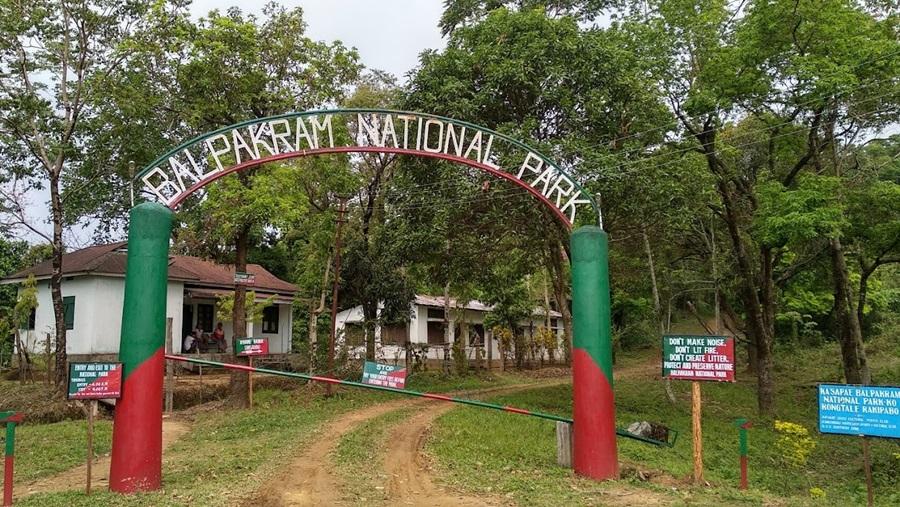
Explore Balpakram National Park in Meghalaya—known as the “Land of Spirits.” Discover its myths, sacred landscapes, wildlife, and hidden history in this immersive travel blog.
Tucked away in the remote South Garo Hills of Meghalaya lies a place that feels untouched by time—Balpakram National Park.
Often called the “Land of Spirits,” Balpakram is not just a national park—it is a sacred realm where nature and mythology intertwine. Towering cliffs plunge into shadowy valleys, dense forests whisper secrets, and the wind carries stories of souls that never truly left.
For the indigenous Garo tribe, Balpakram is more than a landscape—it is a spiritual passage, a resting ground for the departed, and a place where the veil between worlds grows thin.
The Myth of Balpakram: A Gateway for Souls

According to Garo folklore, Balpakram is the final destination of souls after death.
It is believed that when a person dies, their spirit journeys to this sacred land, where it pauses before moving on to the afterlife. The cliffs of Balpakram are said to be pathways for these wandering souls—silent, unseen, yet ever-present.
Elders speak of nights when the wind howls differently, as if voices echo through the valleys. Some claim to have felt an unexplainable presence while standing near the cliffs—an energy that is neither frightening nor comforting, but deeply humbling.
This belief has given Balpakram a sacred status. It is not merely visited—it is approached with respect.
The Legend of the Missing Rock and the Spirit Dog
Among the many legends of Balpakram, one of the most fascinating is the tale of the missing rock.
Locals believe that certain rocks in the park mysteriously disappear and reappear—taken by spirits for unknown purposes. These stones are thought to be markers of the spiritual world, shifting between realms.
Another widely told story is that of a spirit dog that guards the land. It is said to appear only to those who wander too far or disrespect the sacred environment. The dog does not harm—but it guides, warns, and sometimes vanishes into thin air.
Such stories may sound mythical, but in Balpakram, they feel strangely possible.
The Cliffs of Balpakram: Meghalaya’s Grand Canyon

Often referred to as the “Grand Canyon of India,” Balpakram’s dramatic cliffs are among its most striking features.
These vast gorges stretch endlessly, carved by time and elements. Standing at the edge, you are greeted by an overwhelming silence—broken only by the wind sweeping through the valleys.
Local belief holds that these cliffs are sacred thresholds. Looking down into them is not just witnessing a natural formation—it is gazing into a realm where the physical and spiritual worlds converge.
Forests That Breathe with Ancient Energy
Balpakram’s forests are rich with biodiversity, home to rare species such as red pandas, wild buffalo, and exotic birds. But beyond its ecological importance lies something deeper—a sense of ancient energy.
The Garo people believe that these forests are inhabited by spirits of ancestors. Every tree, every river, every stone carries memory.
Unlike modern conservation driven by policy, the protection of Balpakram is rooted in belief. Nature is not preserved out of obligation—it is respected as sacred.
Walking through these forests feels different. The air is heavier, quieter, as if it carries stories waiting to be heard.

Wildlife and Sacred Coexistence
Balpakram is not just mystical—it is alive.
-
Home to elephants, leopards, and rare species
-
Rich birdlife and unique flora
-
One of the most biodiverse regions in Northeast India
But what sets it apart is the harmony between humans and wildlife. Hunting is restricted not just by law, but by tradition and belief.
Animals here are often seen as part of a larger spiritual ecosystem—respected, not feared.

Post a comment